Practical guide to importing into Morocco: requirements, customs and how to manage your international payments
Discover how to import safely, quickly and with traceability in Morocco. Learn about customs requirements, the necessary documents, and market opportunities in Morocco for international businesses.
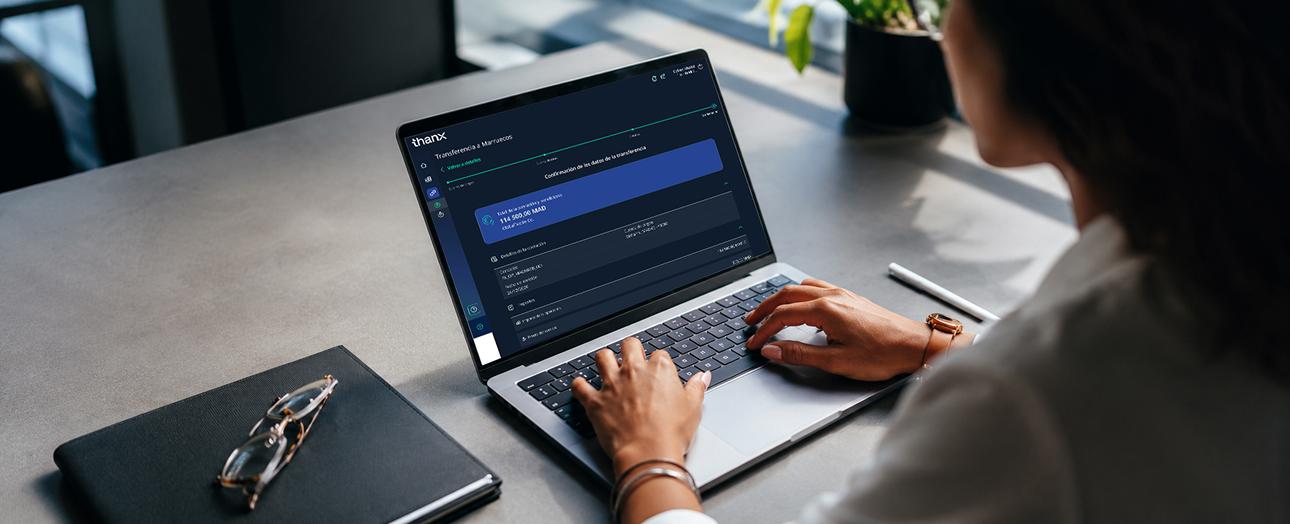
Morocco has established itself as one of the main logistics and commercial hubs in North Africa. Its strategic location, network of international agreements and commitment to the modernisation of infrastructure make it a key connection point between Europe, Africa and the Middle East.
It is essential to know the rules, procedures and bodies related to importation and exportation so that companies wishing to import products can ensure a safe and efficient operation.
Furthermore, it is essential to have tools like thanX (the digital tool for quickly completing transfers from Morocco) that facilitate the management of international payments, choosing the currency that best suits each operation and integrating your payments directly with the PortNet customs system. As a result, importing becomes a more agile, secure process adapted to the pace of your company.
How to import goods into Morocco
Moroccan foreign trade is primarily regulated by the Ministry of Industry and Trade, together with the Moroccan Customs and Indirect Tax Administration (MCITA), which regulates customs in Morocco and the import process.
Imports can be made by sea, land, or air, depending on the type of product and its origin. Morocco has strategic ports such as Tanger Med, Casablanca and Agadir, which facilitate international logistics operations.
For any import operation, a series of administrative steps must be followed to ensure the legality and traceability of goods entering the country.
What do I need to import goods?
Before initiating an import operation, companies must submit some mandatory documents to prove the origin, characteristics and value of the goods. The main ones are:
- Commercial invoice: This is issued by the foreign exporter.
- Packing list: This details the contents of each shipment.
- Bill of lading or air waybill, depending on the means of transport used: This serves as a guarantee that the goods have been received by the transport company and will be delivered at the destination to whoever presents the original document. Certificate of origin: This is especially important if you are seeking to benefit from reductions or exemptions in import taxes as a result of international trade agreements.
- Import declaration: This must be submitted through the MCITA's electronic system.
- Sanitary or phytosanitary certificates: for agri-food, animal or plant products.
All documentation must be in order and, in most cases, translated into French or Arabic, the official languages in Moroccan administrative procedures.
What are the main import customs regimes?
The Moroccan customs system incorporates different regimes, depending on the purpose of the imported goods. Knowing them is key, as this determines the taxes you will pay, the entry conditions, and the fiscal or logistical treatment your products will receive:
- Definitive import regime: This allows the free entry of goods after payment of the corresponding duties and taxes.
- Temporary admission regime: This is used for products that will be re-exported after being modified or assembled in the country. Within this regime, customs duties can be reduced or eliminated entirely.
- Inward or outward processing regime: This is intended for companies that import inputs (raw materials or components) to work or transform them in Morocco with the commitment to then export the manufactured products.
- Industrial free zones: Industrial free zones are areas where companies can import, store, or produce goods without paying taxes or customs duties until the products are sold in the local market. These zones offer tax advantages and streamlined procedures to attract investment and promote industrial activity. Morocco has several industrial free zones, such as Tanger Med and Kenitra.
What are Morocco's import tariffs?
In Morocco, import taxes depend on the type of product and the country of origin. The system uses a calculation based on the total value of the goods and includes the cost, insurance and freight (CIF value). This means that the more valuable the shipment is, the higher the customs duties that apply.
In addition to these duties, other taxes and fees must be paid:
- Import VAT, normally 20%, although certain products have a reduced rate.
- Additional taxes that affect specific sectors such as hydrocarbons, tobacco or alcoholic beverages.
Morocco has free trade agreements with the European Union, the United States and several African and Arab countries. Thanks to these agreements, some goods can enter with lower taxes or even free from tariffs, as long as they meet the conditions of origin that demonstrate where they come from.
What technical standards and certifications must be met?
All imported products must comply with safety, quality and performance standards established by the Moroccan Standards Institute (IMANOR). This means that items must be proven to be safe and of good quality before entering the country.
Some products, such as electrical goods, textiles, toys, or chemical products, require prior certification confirming that they meet the required standards. And, since 2020, Morocco has applied stricter controls: inspections and certifications must be carried out before the goods leave the country of origin, especially if they come from regions with a high volume of exports to Morocco.
What are the steps in the import process?
- Check whether the product requires special authorisation. Some items, such as medicines, weapons, or certain foods, can only be imported with permission from the relevant ministry.
- Register the company as an importer. The company must be officially registered in the Commercial Registry and have a valid tax identification number.
- Engage a customs broker or freight forwarder. This professional is responsible for preparing and submitting the documents, calculating taxes, and managing the passage of goods through customs.
- Submit the import declaration through the PortNet electronic system, a platform that centralises all port and customs procedures.
- Pay the corresponding taxes and fees so that customs authorises the entry of the products into the country.
What opportunities does the Moroccan market offer?
There are many business opportunities in Morocco and the country is becoming increasingly attractive to international companies. Importing is not just about complying with legal procedures, but about taking advantage of the potential of a nation that has a constant demand for industrial products, machinery, energy, and food to supply its domestic market.
The sectors with the highest levels of activity and interest for foreign companies are:
- Energy and fuels. Morocco imports a large part of what it consumes and is promoting projects to diversify its energy sources.
- Machinery and capital goods. These are essential for the growth of industry, especially in the automotive, textile, and construction sectors.
- Agri-food products. These help meet the demand for basic foodstuffs, such as cereals, oils, and dairy products.
Added to all this are the numerous trade agreements that Morocco maintains with different countries and an economic policy aimed at encouraging foreign investment. These elements make the country a strategic point for creating trade alliances and strengthening ties between Europe and Africa.
Import successfully with thanX, the international payments tool
To successfully navigate the import process, it is also important to have a tool that facilitates payments and currency control.
You can do this securely and efficiently with thanX, CaixaBank's new digital tool for:
-
Paying for your imports directly from PortNet, the Moroccan customs system.
-
Choosing which currency to pay with, adapting to the needs of each operation.
-
Managing all your collections and payments on a single platform, with real-time visibility.
-
Sending and receiving money in more than 15 currencies and converting between MAD, EUR, USD or GBP without additional obstacles
thanX simplifies daily financial management and helps optimise international operations for Moroccan companies.
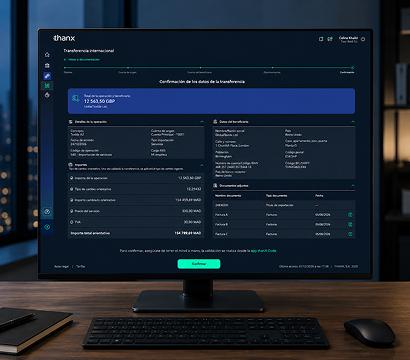
How to send money abroad from Morocco: Practical guide for companies
Learn about the available options, local regulations, and best practices for sending money abroad safely and efficiently.
Dirham to euro exchange rate: Keys to protecting your business
If you operate in Morocco and need to convert dirhams to euros, we explain how the exchange rate works, which factors affect it, and how to avoid unnecessary losses.
Keys to making international transfers from Morocco
Discover how to make international transfers from Morocco securely and efficiently. Learn about the requirements, costs, time frames, and how to simplify the process.
How to make payments to international suppliers from Morocco
Discover how to make payments to international suppliers from Morocco. Learn about the available methods, the applicable regulations, and how to manage your operations securely and efficiently.
Your money,without borders
Join thanX